PCL Injury (Posterior Cruciate Ligament Tear) and Specialist Bracing in Bristol
The PCL is one of the most commonly missed ligament injuries in the knee. An ACL tear usually announces itself with a dramatic "pop" and immediate swelling. A posterior cruciate ligament injury is often quieter – the knee swells, it feels unstable going downhill or on stairs, but the initial presentation can be underwhelming, and that's exactly why it gets missed on first assessment.
The PCL prevents the shin bone (tibia) from sliding too far backwards under the thigh bone (femur) and contributes to rotational stability, especially when the knee is bent. Injuries range from mild sprains to complete tears, and they can occur in isolation or as part of a multiligament knee injury. I see both acute PCL injuries and chronic cases where the diagnosis was initially missed, and I treat the full spectrum – from specialist bracing and rehabilitation through to reconstruction.
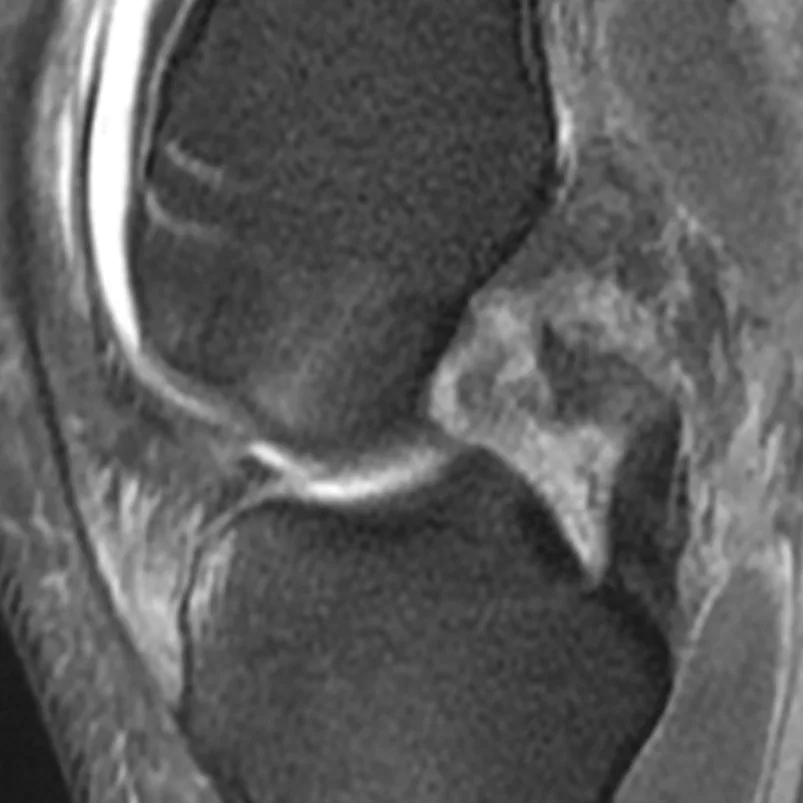
What does the PCL do?
The PCL sits behind the ACL in the centre of the knee. It has three key roles:
- Preventing the tibia moving backwards (posterior translation)
- Stabilising the knee in deeper bend – stairs, slopes, squats
- Working with the posterolateral corner (PLC) and other structures to control rotation
When the PCL is deficient, the tibia can sit slightly "sagged" backwards. This changes knee mechanics and leads to symptoms during downhill walking, stairs, and the deceleration phases of sport.
How PCL injuries happen
PCL tears are caused by a force that drives the shin backwards. The classic mechanism is the dashboard injury – in a road traffic collision, the knee strikes the dashboard and the tibia is pushed forcefully backwards under the femur. I also see it from a fall onto a bent knee with impact to the front of the shin, a sporting collision with direct contact to the upper tibia, and, in more severe cases, a knee dislocation or high-energy trauma, which often involves other ligament injuries at the same time.
PCL injuries are sometimes combined with injuries to the PLC, MCL, or ACL. Identifying these combinations is essential because they change the treatment plan significantly.
Symptoms of a PCL injury
- Pain and swelling after injury (sometimes less dramatic than an ACL tear)
- Difficulty trusting the knee, particularly on slopes or stairs
- A sense of "heaviness" or instability during deceleration
- Giving way in deeper flexion or when changing direction
- Reduced performance in sport or difficulty returning safely to high-demand activity
Red flags
Seek urgent assessment if you have suspected knee dislocation, numbness or weakness in the foot, a cold or pale foot, severe swelling, or inability to weight-bear.
Grading: how severe is the tear?
PCL injuries are graded by how far the tibia sags backwards:
- Grade 1: mild sprain, minimal looseness
- Grade 2: partial tear with increased looseness
- Grade 3: complete tear with significant posterior instability
The grade matters, but I base the treatment plan on your symptoms and function, not the scan alone.
Assessment and diagnosis
PCL injuries can be missed in the early stages, particularly if there is no dramatic locking or giving way. Accurate diagnosis depends on knowing what to look for – and just as importantly, checking whether other ligaments are involved.
When I assess a PCL injury, I focus on the mechanism (how the injury happened), the pattern and timing of swelling, and any instability symptoms during daily activity or sport. I perform posterior laxity testing alongside a full ligament examination – checking the ACL, MCL, LCL, and PLC – because a combined injury changes everything about management. X-rays help identify fractures and avulsion patterns (where the ligament pulls off a bone fragment), and MRI confirms the tear and identifies any meniscus, cartilage, or additional ligament injuries.
Specialist PCL bracing: why it matters
A standard hinged knee brace, the kind used after ACL surgery, does very little for a PCL injury. What you actually need is a brace that actively pushes the tibia forward to counteract the posterior sag.
How a specialist PCL brace works
A specialist PCL brace applies an anteriorly directed force to the upper shin, holding the tibia in a better position while the ligament heals. The best designs are dynamic – the supportive force increases as the knee bends, which is exactly when the PCL is under greatest strain – unlike a static brace, which only restricts movement rather than correcting position.
Brace types you may hear about
- Dynamic PCL brace – adjusts support through range of movement
- Anterior drawer brace – applies a constant forward force to the tibia
- "PCL jack" brace – a design that uses a mechanical pad behind the upper tibia to push it forward, directly counteracting posterior sag
How long is bracing used?
For higher-grade isolated PCL injuries, specialist bracing is usually needed for several months. The exact duration depends on your tear severity, your stability on examination, and how the knee is responding. I adjust the plan as you progress, working closely with your physiotherapy team.
Important: the brace is an aid, not a substitute for rehabilitation. The best outcomes come from specialist bracing combined with structured physiotherapy and appropriate progression back to sport.
Non-surgical treatment (common for isolated PCL injuries)
Many isolated PCL injuries can be managed without surgery, especially if the knee feels stable in daily life and you are not experiencing significant functional giving way. I recommend non-operative treatment more frequently for PCL injuries than for ACL injuries.
What non-operative treatment typically involves
Specialist PCL bracing is used for higher-grade tears or symptomatic posterior sag, alongside physiotherapy to restore movement and rebuild strength and control. Quadriceps strengthening matters in particular, since strong quadriceps help control the position of the tibia. Activity is modified during healing and early rehabilitation, and return to running and sport is guided by function, strength, and confidence rather than a fixed calendar.
When I recommend surgery
Surgery is considered when symptoms persist, instability is significant, or the injury pattern is complex.
PCL surgery may be recommended when:
- There is persistent functional instability despite high-quality rehabilitation and bracing
- The injury is high-grade and the knee remains clearly unstable
- You have a high-demand goal and the knee cannot cope safely
- There is a combined ligament injury (especially PCL + PLC), where reconstruction is often required for durable stability
- There is a PCL avulsion – where the ligament has pulled off a fragment of bone – and fixation is appropriate in the acute setting
PCL fixation and reconstruction
PCL avulsion fixation
Sometimes the PCL pulls off a fragment of bone rather than tearing through the ligament substance. If the fragment is displaced, surgery can reattach it to restore ligament function. This is a different operation from reconstruction and, when the pattern is right, can give an excellent result.
PCL reconstruction
PCL reconstruction rebuilds the ligament using graft tissue. I perform this most commonly for chronic or high-grade instability, or as part of a multiligament reconstruction. The goals are to:
- Restore posterior stability and reduce symptomatic "sag"
- Address associated injuries at the same time (meniscus, cartilage, ACL, PLC)
- Optimise stability through the full range of knee movement
Bracing after PCL surgery
Specialist bracing is also commonly used after PCL fixation or reconstruction to protect the graft while healing occurs. The posterior forces on the PCL increase as the knee bends, so brace settings are chosen to manage this carefully. If I have performed additional procedures at the same time – such as PLC reconstruction or meniscal repair – the brace protocol is adjusted accordingly.
Combined injuries: why PLC and alignment matter
PCL injuries commonly occur with posterolateral corner (PLC) injuries in more severe trauma. This combination is important because the PLC contributes to rotational stability and helps protect a PCL graft. If PLC laxity is not recognised and treated, outcomes can be compromised – I always check for it.
In chronic cases, limb alignment may also influence stability and long-term success. If the leg is in varus (bow-leg), it loads the lateral structures more heavily, and addressing alignment can be an important part of treatment planning.
PCL recovery and rehabilitation
Rehabilitation is essential whether you are treated non-surgically or surgically.
Non-surgical recovery
- Swelling control and restoring full extension
- Progressive quadriceps-led strengthening and movement control
- Specialist bracing as advised to support tibial position during healing
- Return to sport based on milestones and objective testing
After surgery
- Bracing is used early to protect healing tissues
- Weight-bearing and range of motion progression are guided by your procedure and any additional repairs
- Strengthening progresses in stages, with careful management of posterior shear forces early on
Risks of PCL treatment
All surgery carries risks. PCL injury management considerations may include:
- Infection, blood clots, stiffness, prolonged swelling
- Persistent laxity or ongoing instability symptoms
- Graft failure or need for further surgery (if reconstruction is performed)
- Ongoing pain or difficulty returning to high-demand sport
- Post-traumatic osteoarthritis risk after significant ligament injury
Frequently asked questions
Can a PCL tear heal without surgery?
Many isolated PCL tears can be managed successfully without surgery. The key ingredients are good physiotherapy, strong quadriceps work, and in most moderate-to-severe tears, specialist bracing to reduce posterior tibial sag during healing. I recommend surgery if functional instability persists or if there is a combined ligament injury.
Do I need a specialist PCL brace?
Not always, but I recommend one more often than not for grade 2 and grade 3 tears, for knees with symptomatic posterior sag, and for patients who need to return to demanding activity. The decision is based on your examination, imaging, symptoms, and goals.
How is a PCL injury different from an ACL injury?
The ACL primarily controls forward movement and rotation, while the PCL primarily controls backward movement of the tibia and stability in deeper knee bend. PCL injuries are often caused by a direct blow to the shin when the knee is bent – the classic dashboard mechanism – rather than the non-contact twisting injury typical of ACL tears.
When would PCL reconstruction be recommended?
I consider reconstruction when there is persistent functional instability despite rehabilitation and bracing, when the tear is high-grade and symptomatic, or when the PCL injury is part of a multiligament injury pattern (especially PCL + PLC). It is not the first step for most isolated PCL injuries.
Can I be assessed for a PCL injury in Bristol?
Yes. I offer specialist PCL assessment in Bristol, including non-surgical pathways with specialist bracing and physiotherapy, avulsion fixation when appropriate, and reconstruction for complex or persistent instability.
Related knee topics
- ACL injury and ACL reconstruction
- LCL and posterolateral corner (PLC) injuries
- Multiligament knee injury and reconstruction
- Meniscal injuries and meniscus surgery
- Knee cartilage injury and cartilage repair
- Return to sport after ligament surgery
If you have significant knee instability, a suspected knee dislocation, or numbness or weakness in the foot after injury, seek urgent assessment.